Lauren Bedula
0:07
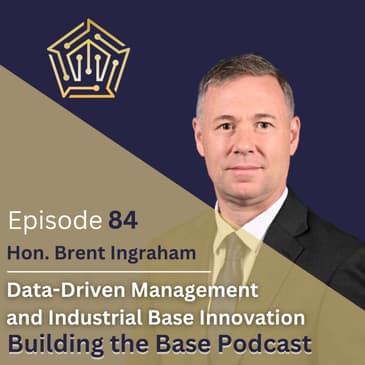
Welcome back to Building the Base. Lauren Bedula and Hondo Geurts here with the Honorable Brent Ingraham, Assistant Secretary of the Army for Acquisition, Logistics and Technology. So he speaks Hondo's language absolutely, sir. Thanks so much for joining us this afternoon.
Hon. Brent Ingraham
0:21
Thank you both for having me.
Hondo Geurts
0:23
Great to see you again Mr. Secretary, it's fun to actually be able to say that as well. So congratulations. You know, we spent lots of time in the building together. We'd like to start off kind of, for our listeners, kind of, what's your background? You've taken a really interesting path to get to this position. Why don't you give folks a sense of you know where you came from and how you got involved in national security and wound up as the Army acquisition executive?
Hon. Brent Ingraham
0:46
Yeah, no, it's been a curvy road, I'll say, how to get here, but, but let me start by just saying it is great to see you again, and I love the smile, right? Like I've seen you a couple times today, smile on your face. Life must be treating you good. So anyways.
Hondo Geurts
1:01
You'll find out one of these days, but not yet.
Hon. Brent Ingraham
1:06
So Brent Ingraham say, engineer by trade, mechanical engineer background actually started the first part of my career, roughly the first 12 years of my career I was in the automotive industry. I designed engines for General Motors and so, so that really started out in sort of design, built plants around the world, and so really got my hands dirty in the sort of manufacturing. How to figure out manufacturing. Fast forward to to late, 2008 early 2009 I got a call one day and was asked by the Marine Corps, by willing to join the Marine Corps. And I said, join the Marine Corps. And they said, Yes, we want you to come join the Marine Corps as a civilian.
Lauren Bedula
1:31
Wow.
Hon. Brent Ingraham
1:32
I had no affiliation with DoD design to to be an engineer for MRAP, the Mine Resistant Ambush Protected vehicle, so I ended up leadership at General Motors at the time said, go help them. They need help. And joined the MARCOR SYSCOM the Marine Corps as I quickly became the the chief engineer for MRAP. I never looked back. Absolutely fell in love with this thing called acquisition inside of Department of Defense, and figuring out how to figure out how to bring the right capability to the to the battlefield that would allow our troops to come home, and that's that was really what drove me, and is still what drives me today. And so that quickly then led to some other random jobs across the Marine Corps. I ended up some time at Dahlgren at the Navy, working on unmanned systems and variety of classified programs and a bunch of things. And then a few years later, I found myself at OSD A&S, which is where I really met Hondo. And there I was, did a variety of things, starting with doing some unmanned acquisition or unmanned system stuff, and then quickly moved over to the joint rapid acquisition zone. Was the JRAC director, and led the ability to get two ones into the organ operational needs to the field again, what I always, that's what drives me, is how we get capability out to ensure our soldiers have what they actually need. And then from there, I wound up being nominated by President Trump to go become the Army SAE
Lauren Bedula
3:20
Wow.
Hon. Brent Ingraham
3:20
And that's where I am, 73 days in 43 of those under a shutdown. And it's been, it's been a curvy road.
Lauren Bedula
3:27
I'm sure the shutdown didn't stop you, and so we want to talk about those 73 days. But in the meantime, what an incredible example of identifying, recruiting and bringing in talent, right? Do you find that you see a path like yours often, or how do they identify you? That's that's incredible.
Hon. Brent Ingraham
3:45
Yeah, so actually, I don't see that path very often, yeah. But, you know, one of the things I wanted to talk to this workforce, right? You need to get that path right. And what does that path will step out? That path was about at the time, you know, the government, right? The Marine Corps Army had bought MRAP Vehicles. MRAP were great from a survivability perspective, right? V-shape hulls would protect our troops, but they were horrible vehicles. Tires would fall off, steering wheel would come off in your hand. Doors would fall. Like automotively? They were a trainwreck. And so really, it was about fixing those things up, and then we also then improved survivability to other things as we went along. But it was about bringing someone in from industry that had sort of an automotive background, that was actually able to do the automotive work we needed on that. And then I got lucky enough to get to dabble in a variety of other things. And like Hondo, lived the acquisition world, where you learn from experiences and figure out where you can make those risks and those trades to deliver capability. And so carried that through, and now we're trying to figure out how we teach to make sure the the Army makes those same sort of risk trades as we go forward to deliver capability faster.
Lauren Bedula
4:59
Well on the workforce piece, or is there anything you're doing or thinking about doing to try to replicate what happened in this case, especially to have someone come in and then go to a leadership position like you done.
Hon. Brent Ingraham
5:08
So it's interesting, I think, a couple of things, one my time in industry, right? So one of the things I have found that has been helped me be very successful in my path is that time in industry, right. So I understand how commercial industry works, right? And so now, when I sit down and think about sort of risks that I need to take on a program, what does that actually do to the industrial base? Do I have a warm industrial base, right? Like I'm able to sort of think in that sort of loan, right? And so as I look at what we're trying to do in the future, and we think about bringing things like autonomous AI tech, right? We often have a workforce that isn't necessarily trained in those areas, right? And so how do I bring that sort of workforce in to support me? But at the same time, you know, the way we do acquisition in the building is very different than commercial, right? So you know, Honda will, because I can think probably back to a young Hondo in the acquisition workforce. You learned right? You cut your teeth on programs and risks, and sometimes you make mistakes and you but you learn from it, right? And you take all those experiences with you. And so we got to get people in. So one of the things that we've been talking about on the army side is how we do more of this cooperative trade with industry, right? Where we bring some people from industry in that come in and work on our work within our program and acquisition teams to learn how government does it, and we send some of those people to commercial industry to learn how commercial industry does it, right? Because the commercial industry was all about return on investment, right? That's what you're really about, right? I gotta make you gotta sell things, make profit, return on investment and that's not something you learn to have to do in the government, right? And so there's this way of, how do we do this, more interaction and trade with industry to bring workforce in.
Hondo Geurts
6:52
So, you know, with this new administration coming in, you know, clear vision, clear, you know, lack of fear of making change. Secretary Driscoll has been very outspoken on his goals, his vision. He's given you clear targets to aim for. Maybe just start with a little bit of overview of where is he and then through you on the acquisition executive really trying to reshape the Army and the way the Army buys and supports capability. And what is that looking like, you know, from a vision standpoint, and some practical things that you're really focused on in your 70, soon to be 74th, day, you know, on this journey to, you know, move from idea and vision to implementation.
Hon. Brent Ingraham
7:43
Yeah, so I think there's a couple of things I'll highlight, right? And you've heard Secretary Driscoll talk about, we've done a disservice to the troops, right, about getting them the capabilities they need as fast as they need it. You know? He loves to talk about how there is, you know, Apple to sort of, sort of software and compute capability that they're still using today, right? And how they got better tech at home when they go home from the the end of the day than they do on the on the battlefield. So I think a couple of things. And it starts with sort of the the whole idea of this acq-reform that we've seen roll out the most W and we at Army have rolled out acq-reform. That's one of the things that I am happy that we've done in the first 73 days of that I've been on here, right? Is we have truly shifted how we think about, uh, organize across big A Acquisition, right? And I think when we hear acq. reform, people immediately go to, how am I going to do contracting better? How might what are my new authorities? What is the pathway I'm going to use? None of that has changed. We've had those authorities right, actually, ever since back when we did the adaptive acquisition framework, when you were when you were back there with us, Hondo, those, those, none of those things are changing. We still have that right. No longer tailor out, tailor in, only what you actually need to do. All those sort of same rules apply. I think what's really changed this time is really, when I say big A Acquisition, right? So we have a we've had a significant change in how we do requirements in the Army, which is massive, right? And then as we try to think about how we streamline budget, right? Budget, consult, budget, line, consolidation, flexible funding. Now, those are all things we got to still continue to through on the Hill with but we had done it for 26 on a couple of areas, UAS counter-UAS of W you know, we know that technology is changing so much that we can no longer buy an unmanned aircraft system that by now should not be the same thing we're buying a year from now, because the Technology has changed, right? So to get out of this sort of thought of a program or record, I'm going to buy it for the next 20 years. And how do we buy consistently, right? And so that's the way the budget flexibility comes into play with I may buy product A, but six months from now, Product B may be better, right? I'm going to switch and go start buying product B, and that's. A that's just a change with how we try to be very transparent with Congress on how we're doing this. And I'll talk a little bit about some tools we're developing to do that, one of my other big initiatives that I've done within the accurate forum. But let me back up still. So, so under the accurate forum, you know, we've gone from from 12 program executive offices to six plus one portfolio acquisition executives. And so when I think about portfolio acquisition, this is really about thinking about kill chains, right? And how we're delivering on capabilities that can go from, you know, the time that, you know, a soldier gets a task to they have to deliver some effect on the battlefield. What are all those things that, all the steps that that has to go through with, how do we deliver there? And so that's where these portfolio acquisition executives now are looking at that they're looking across their portfolio of products, but they also now have all the enablers they need to be able to do that, testing, resourcing, contracting, legal, right, all the enablers that they need to look at across to figure out how they make trades across their portfolio as they're trying to deliver on a set of capabilities. This would be where this in full magic. If we could get flexible, truly flexible funding across portfolio. Is magical, is they can, in a given year of execution, be really looking at, you know, hey, I need more resources put towards this part of the development program because I'm falling behind on the tech or piece, or I'm going to trade that off. Those are trades now they can make so that they can continue to deliver on capability and fill those gaps that they currently have when they something either is not quite ready, right, because it's a Tech Challenge, or you have quality problem at a plant, or, you know, you got a supply chain challenge because you can't get a part right, whatever that case may be, you can move your resources around to deliver on that. And so, so that's where I see this, if I think about how we're really restructured for sort of speed efficiencies, and really driving that down to what I will say, that core capability that those pas will look across that portfolio sort of deliver on. And so this is really about empowering down right? And so that's in the nutshell of how we think about sort of portfolio acquisition executives and sort of our rollout view of this. But what's key is really bringing this back to what we would consider configuration steering boards. Now call them capability trade councils, right? But really to make those trades. So that starts with sort of on the army side, the stand up of T2COM, AFC, and trade off back together to get one requirements community and then with and General Dave Hodne and myself from the ASA(ALT), us to be able to look and make those trades, to figure out how we get those out the door through these capability trade councils.
Lauren Bedula
12:58
Wow, a lot of big announcements in a short period of time. Another, another announcement was around this FUZE program. Is there anything that you can tell our listeners about that?
Hon. Brent Ingraham
13:07
Yeah, so, so FUZE is really. FUZE really brings together how we think about innovation upfront. But what I'll say is how we then scale that, which is where we get a problem. I don't think we've got an innovation problem in the Department of Defense, lots of people are out there innovating, new companies, startups, primes, mid middle, you know, sort of mid size companies. Everyone's innovating. So that's not the problem. Part of it is is, then how do you scale that, especially when you find that innovation and year of execution? Because we all know how this works. If I find a capability, it's really good, and then I get ready to go to scale. I need the money to scale it. I gotta go palm for two years later, when I get through the palm budget cycle and actually get a thing, that capability may no longer be the right capability, that company may no longer even be in business anymore if it's a startup company. And so that becomes the problem is, how do you carry those through the valley of death and ensure you got resources to do that? And so, so there's that piece of it. The other thing I'll try to highlight here that that I have learned over time is the way we budget. And I'll get back to what FUZE really is. But sorry, I just know this is perfect. I get back to the way we budget for things as well. Think about this we tend to do. You know, six one through six four, right? Six four seems to be the magic number, because that's prototype, right? So everyone gets Six four dollars when you go prototype.
Hondo Geurts
14:39
So for the non acquisition geeks out there, those are different accounting levels of research and development funding. I'm answering for a friend.
Hon. Brent Ingraham
14:46
Thank you. So it's the kind of money that allows us to go do prototyping. And so get that money, come to you as a business and say, Build me a prototype for something. You build me a prototype. It works amazing. Now I get ready to have to scale it. The problem is, there's a lot of things you probably didn't do when you built your prototype that I need to do before you can scale it. You probably don't have anti tamper on it. You probably don't have an ATO, right? You may not have done a spectrum analysis, or it's a whole bunch of cyber security stuff, right? All those things that you don't, you wouldn't do until you're ready to scale. The money to do that is called integration dollars, which is six five, we, we don't spend very little six five dollars in the Department of Defense. We tend to think of that as a, as a, as a program, office, task, vice, a sort of this, S&T, early R&D, sort of dollars. We end up that capability sits for two years till you can get the program office can get money to do those sort of things you need to do. So you can actually release it and put in the in the user's hand. So one of the ways we're getting out of that is through the FUZE program. So what we've been after is transformation and contact. We call it the army, and that's where you take this capability. And you're putting it at the very tactical edge with the users in the field right, putting it down at the squad level, letting them use it, getting that feedback. But when we put it in their hands, we're also working through the ability to do all of those sort of things, rapid release approval authorities, trying to break down those, those barriers, to get that stuff early. So after we complete that sort of hands on touch with user, we can actually leave that in the field, if it works. Then when you come back as scale. And you've already got some of that release paperwork, and this things you need to have done are already done, and you can scale it a lot quicker. So FUZE in general is this thing, this is a way to take not only innovation of all size companies. We do that through a number of methods. We've got something called xTech on the edge. We did something really interesting at AUSA this year, for the first time, we had a whole bunch of companies before we had a couple of sort of gaps, capability gaps that we needed to fill. We put those out before AUSA, and we had companies could either propose or just show up at AUSA and and give a basically a 30 second elevator pitch to why they should, why they think they could fill one of those gaps. We then picked from, I think we had a couple of 100 companies that either picked ahead of time to there. We then did a sort of five minute each, like 30 some odd companies got a five minute Shark Tank pitch, and we brought in, not only users, so soldiers. We had some of our program teams there. We had actually some private capital people pitches all the time, right? Sit there and listen to this. And we actually selected eight companies. We gave them each a modest amount, I think it was $52,000 they showed up 20 days later in the jungle with our users, with their capability, and let soldiers put hands on and actually go train and play with it. So that's how you get innovation started, very early in getting in the hands of users, to let them play and touch, to tell us what works and doesn't work, and then FUZE is not just the sort of that early dollars, but there's money there through our tech maturation line. So technology maturation line to then carry those into sort of some of that, through some of those, what I would highlight is six five dollars for some of those things you have to go do ATO or listen anti tamper, they can get them through some of those sort of things, so that they can scale and then, so we use that sort of that pot of money. Now, it's not a ton, it's $750 million this year, which I say is not a ton. That's a lot of money for some people. But you know, we're looking to grow that next year, so that we can quickly sort of get those capabilities, really, from everything from startup to large companies, those innovative ideas into the hands when they work.
Hondo Geurts
19:09
So one of the things I think the Army has done a really good job is advertise we're open for business and try and get the word out and and I think over the last couple years, the amount of people interested in working in defense has really been growing. Oh, it's not just people have been here forever. Oh, it's new startups. What advice would you give to either a startup company or a company that's never really worked with the DoD or with the Army in particular, on how they should be thinking about that engagement? What do you value through your organizations? From them, like, how should they be thinking through this process, you know, versus just showing up with a pitch deck and then saying, Here's my product? What do you think kind of stuff?
Hon. Brent Ingraham
19:53
Hondo, I think one of the things I hear from industry, especially new startups, you know. Why would I want to work with the government? It's real difficult. The bureaucracy is trying to figure out how to get a contract and work through all those challenges, right? And so that has been the real focus, is how to lower the barrier to entrance for those companies. And so part of the way we've done that is really use the tools Congress has given us, right? Commercial Solutions Opening is a perfect example. I don't want to on a 200 page proposal from you with all you know, cost breakdown and stuff. I want a two page white paper. Tell me what you can do and when you can deliver it for me, right? Then I'll evaluate you and drive you off that, right? So reducing the barrier to entry has helped a lot. Think, you know, a lot of companies are also very concerned with, wow, then I get in and I get these very complex contracts from the government, right, cost accounting standards, and one I got to have an ER system. What is that? I like? I'm a 10 person shop that makes this really cool thing, and I want to use it right? So you have, you know, figured out how to do things like Truth and Negotiations Act-lite, right, where we don't make companies do that sort of thing, especially their smaller ones that would create commercial products. So we've tried to really lower the barriers by reducing all those sort of, I'll say, bureaucratic things that in the past companies have, like, it's too messy, it's too hard, it's not worth it for me, for what little bit of dollars it's going to be not interesting.
Hondo Geurts
21:21
Yeah, no. I mean, it's great. It's making a difference. But for them, once they they're in, they want to be there any best practices in terms of how they should think about talking to the Army and presenting their piece. Because I, you know, I think one of the challenges I saw was folks like to pitch a technology or a product and not really understand the use case. You know, we want to go solve problems. We don't want to buy products, right? We want to go solve problems. So as you're increasing this engagement space, what are the things? How are companies being successful in terms of how they talk about their capabilities in a way that can be useful to you.
Hon. Brent Ingraham
22:04
So a couple of ways. First is, I'll say your product talks right. So I don't care what shape it's in, you know, whether it's a rough prototype or something, that's really fine. Let's get it in the hands of users, right? So we will find every opportunity to get it out on the field with soldiers to touch on right? So bring whatever they will be the best feedback you're going to get. It's not me from a PowerPoint presentation. Don't want to see that at all. I want you to bring a product, and let's go put it in the soldiers hands. And we will do that with anybody. Soldiers love to touch and break things and figure out what works and what doesn't. And so let's bring your product out. So that's really the first thing that we are. We've opened that up. We've got, we've got a lot of, you know, planned activities that I say are on the roadmap that you can, you can get into one of those. But if you bring a really good product, and good idea, like, bring your product, because I want that product in the hands, right? That's what we'll do. We'll get you be just touched on. So I think that's, that's sort of the first piece of that. Second thing is, as you heard today from Secretary Hegseth, is think about the industrial base, right? We understand you may be a startup and you may not have a full production line. We're okay with that, but be thinking about, instead of thinking about, potentially, you know, building a whole bunch of brick and mortar that's going to take you two years to build a certain factory. Who can you partner with? Right? We want to see industry partner more together, where they can right. And so potentially, instead of, you know, building that new brick and mortar, come talk to us, we have a we have a tremendous asset in this in this nation, it's called the organic industrial base. We have depots and arsenals and places where we can help you build product, right? And it it helps you, it helps us. Or having you partner with another, somebody else from industry would be tremendous, right, where maybe you got a really innovative idea, somebody else, you know, we saw some companies, you know, just yesterday on a tour, a company like a Hadrian this figuring out how to mass produce, or Castilian is figuring out how to do mass production on 3D Printing. Those sort of companies are open for business to help you make the products you need to make. I don't need you to go build a factory. So bring your idea. Even though you don't have a factory ready, we're still interested.
Lauren Bedula
24:19
Those are great tips, and I've got one more, which is, it's been a long day here at the Reagan National Defense Forum. What's been your take on the energy, or any trends you've picked up on, or themes?
Hon. Brent Ingraham
24:30
I think the energy behind the industrial base, right? There's that's really a big theme, and we do. We need to grow the industrial base, right? We need a strong industrial base to have be sure we've got that. You know that that peace through security piece, but we don't know, I don't know if we actually know what the industrial base looks like yet. So can I tell you about a third thing that I'm really excited about in the Army, that that I know Hondo will appreciate talking a little bit about. So it was sort of day one when I, when I took over, I decided I do not want to manage programs by PowerPoint. That's how that's how the Pentagon works, right? And so we don't in the Army anymore. We manage programs through a live digital dashboard with all the programmatic data. In fact, one of my PAEs confessed to me yesterday or two days ago, right, that I'm wearing him out because I now have access to every programmatic data, to cost, schedule, performance, the budgets, where he is on contract, and when the contract supposed to be released, or when is released, how he's executing his exclusive dollars, what he's calculated for, risk, all those things. You would get it through a normal program review, where they would bring in the stack of, you know, 100 PowerPoint charts, and walk you through and, and I know Hondo's looked at many of those things right now we look at it through live data. One of the things we're trying to do through that live data now is capture, what are those industrial base impacts, right? So, where does that money flow? Who is the, you know, what is the prime what are the subtier supply base. Part of it is so we can look out there to understand where we think we have concerns when we put too much pressure on some part of the supply chain where, well, we're going to break something and then not deliver on a capability. And so pulling all that data together has been amazing, and we're at our nascent stage, but we have it now, and that's how we're managing it going forward, that the and so I know Hondo probably remembers we had this meeting in the Pentagon called defense management action with the DMAGs, and when, when I worked with for Ellen Lord, and she was the Under Secretary for A&S. We tried through very we had some very nascent DMAGs we, you know, the tools have gotten a ton a lot better. We finally, on the Army side, got all our data in there, and so we can truly manage with digital data and truly understand where our gaps, our holes are, which programs at risk, and then we will continue to look at that and refine that so that we can get left of any concerns we have. And that's where we start to talk about those sort of everything from trades, from requirements, where you need to move resources around to ensure you can continue to deliver on schedule.
Hondo Geurts
27:16
So, you know, got the vision, got the marching orders, got the urgent need, got the mission pull. Now it's implementation. And yeah, dashboards are great example. Ultimately, this is a human endeavor. And you know, the workforce, civilian workforce, in particulars, you know, had a, had a pretty challenging year, a lot of, lot of challenges. What's your message to all those acquisition teams out there? You know, as the senior acquisition secretary for the Army, what do you do you want out of them? What are you expecting out of them? And what is like success look like as you move into the implementation side of this so that they are all kind of rowing in the right direction to deliver on what Secretary Driscoll has asked for.
Hon. Brent Ingraham
28:06
So I'll tell you, I held a town hall, Dave Hodne and I, General Hodne and I held a town hall. And the one word I would explain to them that I that I think this does because they're concerned, right? Their organization change. Everyone gets concerned. You have a whole massive amount of change.
Hondo Geurts
28:22
The only person likes a change is a baby with a wet diaper, right?
Hon. Brent Ingraham
28:25
Yeah, exactly. And so what, what I will say is, you know, we are unleashing them. That's the word I use for them, right? This is gives them really the ability to to make those trades, move the resources, deliver on our product, right? Truly unleashing the workforce. We are not about process. I don't care about, you know, necessarily, all of the processes that we had in place we used to, you know, I, while I can't move, I can't go do my next step, because I gotta go do get this paperwork signed in triplicate by these 10 people before I could break that free, right? Those are the sort of roadblocks where we're moving and really want to unleash you to do what we hired you to do, which is deliver capability. Right? We've hired the best contracting officers, the best program managers, the best engineers, the best logisticians. We want you to go deliver, do what you do, right? That's why we hired you. And we want to take the bureaucracy of all of the staffing, of paperwork and processes out do it with live data. Let you go and be focused on the job we need you to do, which is absolutely designing, developing, delivering, sustaining, figuring out the logistics plans. That's what I need you to focus on, and that's what this is really about. And so that's sort of the message that we're continuing to drive we've unleashed you now go get it.
Lauren Bedula
29:42
Gosh, I feel like that's a great message for all of our listeners, really, across industry, government, you name it, nonprofits. Secretary Ingraham, thank you so much for taking the time out of your busy 74 days. We're honored to spend this time with you and hear all these updates too. So thanks again.
Hon. Brent Ingraham
29:58
No thank both of you. This is tremendous. And I'm happy to come back at some point and give you, you know what it is in, you know, 150 days, or 120 days, we're we're moving fast, we're not slowing down.
Lauren Bedula
30:09
Be careful. Yeah, we'll take you up on that. We love it. Thank you again.
Hon. Brent Ingraham
30:19
Thank you very much.